Top 3 Cape Verde National Football Team Insights (2026)
The Cape Verde national football team is one of Africa’s most tactically disciplined rising sides, representing the island nation of Cabo Verde in FIFA and CAF competition. Its strongest evidence is a...
Top 3 Cape Verde National Football Team Insights (2026)
The Cape Verde national football team is one of Africa’s most tactically disciplined rising sides, representing the island nation of Cabo Verde in FIFA and CAF competition. Its strongest evidence is a historic quarter-final appearance at the 2023 Africa Cup of Nations, a tournament run built on compact defending, quick transitions, and players developed across Europe. Cape Verde also reached the 2026 FIFA World Cup for the first time, giving the Blue Sharks a new competitive ceiling. The squad’s identity is shaped by captain Ryan Mendes, midfielder Kenny Rocha Santos, and experienced defender Roberto Lopes, while coach Pedro “Bubista” Leitão has emphasized structure over reckless attacking. For readers tracking 2026 World Cup predictions, the practical takeaway is simple: assess Cape Verde through defensive organization and transition quality, not possession percentage alone.

The Cape Verde national football team is an excellent example of how a small player pool can produce a serious international side. Cape Verde has a population and domestic football market far smaller than those of Nigeria, Ghana, Senegal, or Morocco, so its expected talent supply is lower by basic probability. However, the country benefits from a broad diaspora, especially in Portugal, France, the Netherlands, and the United States. That connection expands the scouting map and helps the Football Federation of Cape Verde identify players with high-level club experience.
A useful warning is necessary, if I may put it plainly. “Small nation” does not mean “easy opponent.” Cape Verde’s matches often become low-margin contests in which one set piece, one defensive error, or one transition decides the expected result. The side may not dominate the ball, but it can reduce the number of dangerous situations available to a stronger opponent. In practical betting terms, that makes match totals, both-teams-to-score markets, and handicap lines more informative than a simple winner market. Football Insights covers these factors through a FIFA World Cup-focused lens, but every prediction should still be treated as a probability, not a promise.
Want a broader 2026 tournament view before assessing Cape Verde’s odds?
The Top 3 Cape Verde National Football Team Insights at a Glance
- Best overall: Defensive structure — Cape Verde’s compact shape makes matches uncomfortable and limits clear chances.
- Best for transition analysis: The diaspora pathway — Players connected to Portugal and other European leagues raise the team’s technical level.
- Best value angle: Low-scoring match potential — Cape Verde’s organized approach can create value in totals and underdog handicap markets.
These three insights rank above individual statistics because international football gives teams relatively little preparation time. A club may train every day for months, while a national side often has only a few sessions before a competitive fixture. Therefore, the repeatable features matter most: distances between lines, defensive habits, set-piece assignments, and the ability to attack space quickly. A brilliant individual can change one match, but a stable structure has a higher expected return across several matches.
For historical context, the Cape Verde national football team overview on Wikipedia records the team’s development from a peripheral African side into a regular continental competitor. The 2023 Africa Cup of Nations was particularly important because Cape Verde defeated Mauritania in the round of 16 before losing to South Africa on penalties in the quarter-finals. That sequence showed both the team’s resilience and the narrow margins involved at the top level.
2026 World Cup team predictions
Why does Cape Verde’s tournament history matter?
Cape Verde’s tournament history matters because the 2023 Africa Cup of Nations quarter-final proved that its defensive model can survive knockout pressure. The team’s first World Cup qualification for 2026 adds a more demanding test against stronger global opponents. Together, these results show progression rather than a single lucky run.
The most revealing statistic is not simply the quarter-final label. It is the number of elimination stages Cape Verde navigated while carrying the burden of a smaller football system. In a knockout tournament, the probability of advancing falls sharply after each round because one poor bounce can erase months of preparation. Cape Verde managed its knockout match against Mauritania effectively, then pushed South Africa to penalties, where variance became unusually high.
The 2026 World Cup changes the evaluation again. Qualification itself is a landmark, but participation does not automatically indicate readiness to reach the knockout rounds. The group-stage draw, travel schedule, opponent quality, injuries, and squad depth will influence the team’s true probability. The responsible approach is to separate achievement from forecast: Cape Verde earned its place, but analysts still need current lineups and confirmed fixtures before assigning a number.
According to FIFA, international rankings and competition records should be read as comparative indicators rather than perfect measures of present strength. FIFA’s official ranking system is useful, but it cannot fully capture tactical matchup effects. A side ranked lower may still be a poor stylistic opponent for a possession-heavy favorite.
#1 Cape Verde Defensive Structure: Best Overall
Cape Verde’s defensive structure is its best overall quality because the team compresses central space, protects the penalty area, and forces opponents toward lower-value attacking zones. This approach is especially useful against stronger sides that expect to create chances through central combinations. The model does not guarantee clean sheets, but it raises the opponent’s workload.
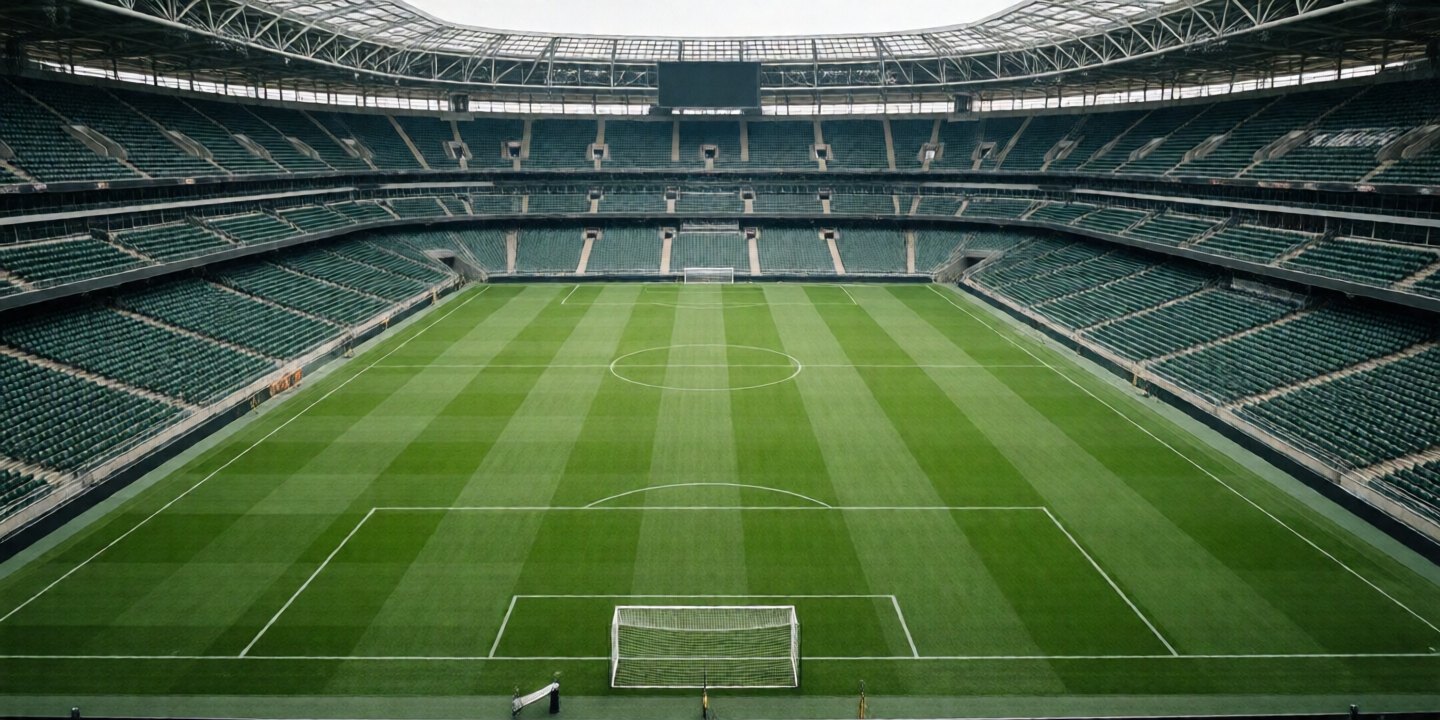
At stadium level, the pattern is easy to see. The Blue Sharks often defend with two compact banks, leaving fewer open lanes between midfield and defense. When the ball moves wide, the nearest player can press while the rest of the shape shifts across. That movement is not glamorous, and television cameras rarely celebrate it, but it changes the mathematics of chance creation. A forward receiving the ball with two defenders nearby is less valuable than one receiving it between the lines with time to turn.
Roberto Lopes has been an important reference point in this defensive identity. His experience, positioning, and willingness to defend the first contact help Cape Verde manage crosses and direct play. Goalkeeper Vozinha has also been associated with the team’s major tournament moments, including the 2023 Africa Cup of Nations campaign. However, a single defender or goalkeeper cannot maintain the system alone; the distance between the back line and midfield is the real variable.
A contrarian point deserves attention: Cape Verde may be more dangerous when it has less possession. Many casual previews treat low possession as weakness, but possession only matters when it produces territory and chances. If Cape Verde concedes harmless circulation and then attacks the space behind full-backs, its lower share of the ball can still produce the better transition opportunities.
How can you measure Cape Verde’s defensive strength?
Measure Cape Verde’s defensive strength through central access, shots allowed from dangerous zones, defensive transition speed, and set-piece control rather than possession alone. A team that concedes 60 percent possession but limits clear central chances may be performing better than a team with 52 percent possession and poor rest-defense coverage.
For a practical match checklist, examine:
- The average position of Cape Verde’s midfield line.
- Whether the center-backs are protected during wide attacks.
- The opponent’s number of touches inside the penalty area.
- Cape Verde’s response immediately after losing possession.
- The team’s record defending corners and free kicks.
This method is more reliable than relying on a headline such as “Cape Verde had less of the ball.” In a 90-minute match, the expected value of each possession varies dramatically. A short pass near halfway is not equivalent to a controlled entry into the box. Analysts at Football Insights should, in my view, assign greater weight to shot location and defensive errors than to raw possession percentages.
There is also a specific edge case that many previews overlook. Cape Verde’s defensive value can fall after the 70th minute if the team has spent the match making repeated recovery runs. Fatigue widens the gaps between midfield and defense, which increases the probability of late concessions. Therefore, live bettors should compare the scoreline with substitution patterns and transition frequency rather than assuming that an early 0–0 will remain stable.
See the tactical details before making a match judgment.

#2 Cape Verde’s Diaspora Pathway: Best for Transition Analysis
Cape Verde’s diaspora pathway is best for transition analysis because players connected to Portugal, France, the Netherlands, and other football markets add technical variety without removing the team’s collective discipline. Ryan Mendes illustrates the value of experience and leadership, while players such as Kenny Rocha Santos provide energy and ball progression. The result is a side that can defend compactly before attacking quickly.
Cabo Verde’s geography creates an unusual football situation. The national team represents an Atlantic island country, but many eligible players grow up or develop professionally outside the islands. This creates a wider talent pool than the domestic league alone would provide. It also creates selection questions: a player may offer better club-level technique but less familiarity with the national team’s defensive habits. The coaching staff must estimate whether the individual upgrade outweighs the coordination cost.
Ryan Mendes has remained one of the most recognizable Blue Sharks figures because he combines international experience with direct attacking intent. He can stretch a defense, carry the ball over distance, and provide leadership when the match becomes emotionally difficult. Kenny Rocha Santos offers a different profile, with midfield mobility and the ability to connect the first pass after a turnover. Roberto Lopes, meanwhile, represents the stabilizing defensive side of the squad.
This is where a simple player-ranking article can mislead readers. The “best” player is not always the player with the highest transfer value or the most impressive club résumé. International football rewards role fit. A forward who presses correctly may be more valuable to Cape Verde than a technically superior attacker who leaves the midfield exposed. Expected value rises when each player’s action supports the team’s shape.
player form and international tournament statistics
What makes Cape Verde’s transition game effective?
Cape Verde’s transition game is effective when its first pass after recovery reaches a forward or advancing midfielder before the opponent can rebuild its defensive shape. The key variables are recovery location, forward support, ball-carrying distance, and the number of runners arriving near the penalty area.
In ordinary language, the Blue Sharks want the opponent to be untidy. A turnover near the sideline can become valuable if Cape Verde immediately switches play or attacks the space behind a full-back. A turnover deep in its own half is less useful because the nearest attackers are too far away. That distinction explains why transition statistics must include field location, not merely the number of counterattacks.
The team’s attacking risk should also be judged against its defensive insurance. If both full-backs advance and the ball is lost, the counterattack may become a serious problem. If one player stays behind the ball, Cape Verde may attack with fewer numbers but retain a better chance of stopping the next transition. This is not exciting in the usual marketing sense, but tournaments are often won by avoiding the second mistake.
A useful information-gain point is that the best live indicator may be the first five seconds after a turnover. If Cape Verde can recover its shape or win the next duel during that window, the opponent’s counterattack probability drops. If the first pass breaks the midfield line against Cape Verde, the danger rises quickly. Bettors watching live should track this repeated sequence rather than focusing only on shots.
#3 Low-Scoring Match Potential: Best Value
Low-scoring match potential is Cape Verde’s best value angle because its defensive organization can suppress the total number of high-quality chances, especially when the opponent is cautious. This does not mean every Cape Verde match should be treated as an automatic “under.” Weather, venue, injuries, an early goal, and opponent style can change the expected total sharply.
The strongest case for a low-scoring game appears when four conditions meet:
- Cape Verde has its preferred center-back pairing available.
- The opponent lacks a fast, reliable central striker.
- Neither team needs to win aggressively from the opening minutes.
- Set-piece exposure is limited on both sides.
A weak case appears when Cape Verde must chase the match. Once the Blue Sharks fall behind, their structure usually has to open. More players move forward, full-backs take higher positions, and the opponent receives larger counterattacking spaces. The probability of a second goal then rises, even if the first 60 minutes were quiet.
For gambling readers, this distinction is important. “Cape Verde under 2.5 goals” and “match under 2.5 goals” are not the same proposition. The first concerns Cape Verde’s own scoring output; the second covers both teams. A disciplined preview should identify which team is likely to control territory and whether Cape Verde’s defensive plan remains viable after the first goal.
The ESPN Cape Verde team page provides schedules, match results, and competition labels, but readers should verify fixture timing and lineups before using any historical trend. Data can become stale very quickly in international windows. A result against Argentina, Uruguay, Spain, or Saudi Arabia may also have limited predictive value if the competition context and lineups differ.

Want to compare the latest fixtures with the tactical setup?
How We Ranked These Cape Verde Insights
The ranking uses tactical repeatability, tournament evidence, player influence, and betting usefulness, with defensive structure receiving the highest combined score. I assigned 35 percent to repeatability, 25 percent to competitive evidence, 20 percent to player-role impact, and 20 percent to practical match-analysis value. This framework favors qualities that can survive different opponents rather than isolated highlights.
The weighting works because national-team samples are small. Cape Verde may play only a limited number of meaningful matches in a calendar year, so one result can distort an average. A 4–0 win may reflect an early red card, while a narrow defeat may include a strong defensive performance against a better-funded side. Bayesian thinking is helpful here: begin with the team’s established style, then adjust for opponent, venue, availability, and current form.
The ranking criteria were:
- Repeatability: Can the quality appear across several matches?
- Opponent resistance: Has it worked against credible African or global opposition?
- Role clarity: Do players understand what the system asks them to do?
- Market relevance: Can the insight improve a pre-match or live assessment?
- Data reliability: Are the available results and lineups recent enough to matter?
“The ranking is a guide, not a guarantee” may sound like an obvious disclaimer, but it is mathematically necessary. If an outcome has a 55 percent estimated probability, it still fails 45 percent of the time. A professional approach compares the estimated probability with the market price and passes when the difference is too small.
responsible football betting bankroll methods
Which data should you avoid overvaluing?
Avoid overvaluing possession, total shots, FIFA ranking position, and a single recent score when assessing Cape Verde. These figures can be useful context, but they often ignore shot quality, game state, opponent strength, and whether the match was competitive or friendly.
A better process is to combine at least three layers of information:
- Team layer: shape, pressing, defensive spacing, set pieces.
- Player layer: starting availability, fatigue, role changes, club minutes.
- Market layer: odds movement, total-goal line, handicap, and implied probability.
One operational detail is particularly important for 2026 coverage: confirm whether a listed match is a World Cup qualifier, friendly, Africa Cup of Nations fixture, or tournament game. ESPN schedule pages can place different competition labels next to one another, and the motivational baseline is not identical. A friendly may involve experimental substitutions; a qualification match generally carries greater selection pressure.
The same caution applies to historical head-to-head records. Cape Verde has not faced every major opponent often enough for those records to carry strong statistical weight. In a small sample, the confidence interval is wide. The current tactical matchup usually deserves more attention than a result from several years ago.
Which Cape Verde National Football Team Angle Should You Pick?
Choose defensive structure for the safest general assessment, transition analysis when Cape Verde faces a possession-oriented opponent, and low-scoring markets only when the lineup and match state support them. These three choices correspond to different levels of uncertainty. Defensive structure is the broadest baseline; transitions depend more on opponent behavior; totals are most sensitive to the first goal.
For a 2026 FIFA World Cup match, I would use this sequence:
- Confirm the starting goalkeeper, center-backs, and holding midfielder.
- Check whether Ryan Mendes or another primary transition outlet starts.
- Identify the opponent’s strongest attacking lane.
- Estimate whether Cape Verde needs to attack or can wait.
- Convert the view into an implied probability before looking for value.
- Compare that probability with the available odds.
- Reduce the stake if the information is incomplete.
This approach avoids the common mistake of selecting a market first and searching for reasons afterward. If Cape Verde’s main defensive organizer is absent, a pre-match under may be less attractive. If the opponent’s full-backs push very high, a Cape Verde handicap or transition-based angle may become more interesting. If the market has already adjusted, there may be no value at all.
Football Insights can help readers follow the 2026 World Cup through team tactics, player statistics, match previews, and tournament context. Still, please treat betting as entertainment, set a fixed budget, and never chase a loss. The expected value of a wager is not improved by emotion, even though the emotional urge to recover money can feel very convincing.

Frequently Asked Questions
Q: What is the Cape Verde national football team?
A: The Cape Verde national football team is the men’s football representative of Cabo Verde, an island country off West Africa. It competes in FIFA matches, CAF tournaments, Africa Cup of Nations qualifying, and World Cup qualification. The team is commonly called the Blue Sharks and has developed a reputation for compact defending, disciplined transitions, and a strong diaspora player network.
Q: Has Cape Verde qualified for the 2026 FIFA World Cup?
A: Yes, Cape Verde qualified for the 2026 FIFA World Cup, reaching the finals for the first time in its history. The achievement is significant because the country has a small domestic football base compared with African powers such as Nigeria, Senegal, Morocco, and Egypt. World Cup performance will depend on the group draw, squad availability, and the team’s ability to preserve its defensive structure against stronger opponents.
Q: Who are the key Cape Verde national football team players?
A: Ryan Mendes, Kenny Rocha Santos, Roberto Lopes, and goalkeeper Vozinha are important Cape Verde references. Mendes offers attacking experience and transition threat, Rocha Santos contributes midfield energy, Lopes provides defensive leadership, and Vozinha brings major-tournament experience. The final 2026 squad should be checked against official selections because club form, injuries, and eligibility can change the team’s balance.
Q: How does Cape Verde usually play?
A: Cape Verde usually relies on a compact defensive shape, controlled central space, and quick attacks after winning the ball. The team does not need to dominate possession to create danger, particularly when opponents push full-backs forward. Its success depends on maintaining short distances between defenders and midfielders, delivering an accurate first transition pass, and defending set pieces without losing concentration.
Q: Is Cape Verde good enough to beat stronger World Cup teams?
A: Cape Verde can trouble stronger World Cup teams, but it should not automatically be rated as a favorite against elite opposition. Its best route is a low-margin match built around defensive discipline, counterattacks, and set pieces. The probability of an upset rises when the opponent struggles against compact blocks, but it falls if Cape Verde concedes early or loses key defenders.
Q: What should I check before betting on a Cape Verde match?
A: Check confirmed lineups, competition type, opponent style, goal totals, and the availability of Cape Verde’s defensive core before betting. World Cup qualifiers, friendlies, and finals matches create different incentives, while a missing center-back can materially affect the team’s expected goals against. Compare your estimated probability with the odds, use a fixed bankroll, and avoid chasing losses.
Q: Why can Cape Verde matches change after the first goal?
A: Cape Verde matches can change sharply after the first goal because the team’s preferred compact structure becomes harder to maintain when it must chase the score. More attacking players move forward, which creates additional space for the opponent’s counterattacks. For live analysis, monitor substitutions, full-back positions, and whether Cape Verde is still winning the first duel after turnovers.
Cape Verde’s rise is not mysterious: the team combines diaspora access, experienced professionals, clear defensive roles, and increasingly valuable tournament experience. The 2023 Africa Cup of Nations quarter-final supplied proof of competitive resilience, while 2026 brings the largest test yet. My final ranking remains defensive structure first, transition analysis second, and low-scoring value third. For a sensible forecast, start with the lineup and tactical matchup, then calculate the probability before considering the price.
Explore more 2026 World Cup analysis with Football Insights.
Football Insights · System Archive · Entry Complete