Top 3 World Cup Football Eras: What 96 Years Taught Me
Brazil’s 1970 World Cup era is the clear number-one choice because it combined six wins, 19 goals, Pelé’s influence, and a final victory over Italy with football that still looks unusually complete. A...
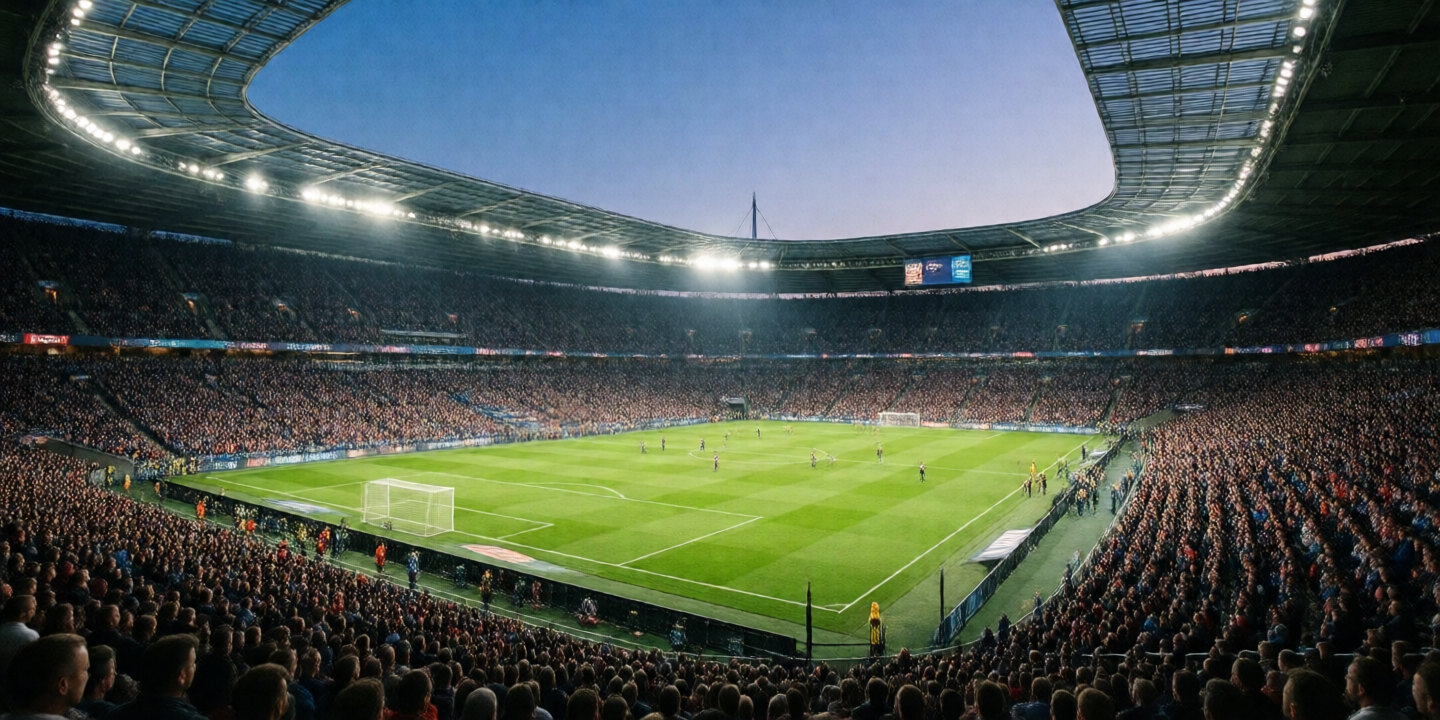
Top 3 World Cup Football Eras: What 96 Years Taught Me
Brazil’s 1970 World Cup era is the clear number-one choice because it combined six wins, 19 goals, Pelé’s influence, and a final victory over Italy with football that still looks unusually complete. Across 96 years, the FIFA World Cup has shown that talent alone is not enough: tournament structure, tactical flexibility, defensive balance, and pressure management matter. Uruguay won the first tournament in 1930, Germany became the first European champion in South America in 2014, and the 2026 edition will expand to 48 teams across Canada, Mexico, and the United States. My ranking weighs performance, historical influence, tactical value, and lessons for modern match analysis. Please use these conclusions for informed football discussion rather than guaranteed predictions, because even the strongest side can lose one knockout match. For practical 2026 coverage, compare team form, injuries, odds movement, and confirmed line-ups before making any decision.

Photo by Ketut Subiyanto on Pexels
The phrase “best World Cup football” usually produces an argument, which is fair. Football is not a laboratory experiment with perfectly repeatable results. A single deflection, refereeing decision, or penalty shootout can change the expected value of an entire campaign. Still, the tournament’s history provides enough evidence to rank eras with reasonable discipline.
At Football Insights, the focus is on FIFA World Cup predictions, team tactics, player statistics, and daily tournament coverage for fans following the 2026 World Cup. This article therefore does not simply list famous winners. It asks which World Cup eras gave us the most useful lessons about winning football, tactical change, and the limits of reputation.
Want a clearer view of the tournament’s key patterns?
The Top 3 at a Glance
The three strongest World Cup eras are ranked by measurable tournament success and lasting football influence. Brazil’s 1970 team ranks first, Germany’s 2014 generation ranks second for modern tactical value, and Uruguay’s 1930 side ranks third for historical importance and tournament efficiency.
- Brazil 1970 — best overall: Six victories from six matches, 19 goals, and a final win over Italy demonstrated attacking talent supported by structure.
- Germany 2014 — best for modern tactics: Germany combined possession, pressing, positional rotation, and defensive control before beating Argentina 1–0 in extra time.
- Uruguay 1930 — best value: Uruguay won the inaugural FIFA World Cup on home soil, scoring 15 goals in four matches and proving that compact tournament planning matters.
The rankings are not meant to claim that Brazil 1970 would automatically defeat Germany 2014. Cross-era comparisons are naturally imperfect because pitches, balls, substitutions, sports science, travel, and rules changed. In probability terms, the confidence interval is wide, but the direction is still useful: the best teams solved more than one problem at the same time.
The official historical record from FIFA remains the starting point, while the tournament’s broader match and competition data can be checked through RSSSF. Those sources matter because “greatest team” claims often rely on highlight clips rather than complete match records.
Ranking snapshot
- Attacking output: Brazil 1970 led this group with 19 goals.
- Defensive control: Germany 2014 conceded four goals in seven matches.
- Tournament efficiency: Uruguay 1930 won four matches from four.
- Historical influence: Uruguay created the first World Cup benchmark.
- Modern relevance: Germany 2014 offers the most transferable tactical lessons.
[Internal Link: FIFA World Cup history and winners]
#1 Brazil 1970: Best Overall
Brazil 1970 is the best overall World Cup football team because it paired elite individual talent with repeatable attacking patterns, winning all six matches and scoring 19 goals. The tournament in Mexico also showed that creative freedom works best when players understand their spaces, pressing responsibilities, and passing options.
Brazil entered the 1970 tournament with a remarkable group of attacking names: Pelé, Jairzinho, Tostão, Rivellino, Gérson, and Carlos Alberto. The famous 4–2 final victory over Italy was not merely a display of flair. Brazil repeatedly created overloads between the lines, moved defenders away from the ball, and attacked from several channels. Jairzinho scored in every match, a record that remains one of the clearest examples of dependable tournament production.
The numbers are persuasive:
- Brazil won six out of six matches.
- Brazil scored 19 goals, averaging 3.17 per match.
- Jairzinho scored seven goals.
- Pelé scored four goals and supplied major creative influence.
- Brazil beat Italy 4–1 in the final at the Estadio Azteca.
- Carlos Alberto’s final goal became one of the tournament’s defining images.
There is also a less romantic lesson. Brazil’s attack did not depend on one narrow route. If Pelé was marked, Rivellino could carry the ball or shoot from distance. If the central lane closed, Carlos Alberto and Everaldo provided width. If the first press failed, Brazil could recover its shape rather than turning the match into a frantic exchange.
That balance is why I rank Brazil 1970 above other celebrated champions. The “beautiful football” label is accurate but incomplete. The side also managed risk well. Its expected attacking value was high because several players could create a chance, while its probability of becoming predictable was relatively low.

Photo by Pavel Danilyuk on Pexels
A practical point for modern match analysis follows from this. When evaluating a 2026 contender, do not count star names alone. Count the number of reliable attacking mechanisms. A team with one world-class striker but weak wide progression may have a lower knockout ceiling than a team with four good creators and a stable defensive rest shape.
This is where Football Insights takes a more cautious view than some “official” promotional predictions. A famous squad may attract money and media attention, but popularity is not the same as probability. Before assessing a Brazil, France, Argentina, or England match, examine chance creation, set-piece defense, midfield availability, and the opponent’s pressing resistance.
See how the numbers can change your reading of a match.
#2 Germany 2014: Best for Modern Tactics
Germany’s 2014 World Cup team is the best choice for studying modern tactics because it combined controlled possession with pressing, positional rotation, and defensive compactness. Germany played seven matches, scored 18 goals, conceded four, and defeated Argentina 1–0 after extra time in the final at the Maracanã.
Germany’s route to the title was not perfectly smooth. The 4–0 win over Portugal suggested overwhelming attacking power, but the 2–2 draw with Ghana exposed problems when Germany lost control of midfield transitions. The 1–0 extra-time win against Argentina then showed a different quality: patience under pressure.
The semifinal against Brazil produced the extraordinary 7–1 result. Germany scored five times between the 11th and 29th minutes, exploiting defensive gaps that became larger with every failed Brazilian recovery. It would be a mistake, however, to treat that one match as the entire explanation. Germany’s tournament success came from several connected features:
- A flexible midfield: Toni Kroos, Bastian Schweinsteiger, and Sami Khedira offered passing security, defensive work, and control of tempo.
- Multiple defensive options: Mats Hummels, Jérôme Boateng, and Per Mertesacker provided strength in the air and disciplined positioning.
- Useful rotation: Philipp Lahm could play in midfield or at right-back, giving Joachim Löw tactical flexibility.
- Bench impact: Mario Götze entered the final and scored the winning goal in the 113th minute.
- Transition awareness: Germany often attacked with numbers but tried to preserve enough structure to stop counterattacks.
The contrarian conclusion is that Germany 2014 was not simply a “possession team.” Possession was a tool, not an identity. Germany could circulate the ball, accelerate through the middle, press after losing it, or defend deeper when the match required patience. That adaptability is more valuable than a fixed style because knockout football punishes teams that have only one plan.
[Internal Link: World Cup team tactics and formations]
How does this help with 2026 analysis? The expanded tournament will include 48 teams, up from 32, with Canada, Mexico, and the United States hosting matches. More teams create more unfamiliar pairings, more travel variables, and a larger gap between some group opponents. The tournament format also means that qualification from the group is not the same as being ready for the knockout rounds.
A team with strong rotation options may gain more than a team built around 11 fixed starters. In a long competition, expected points from the first two group matches can allow a coach to manage minutes. However, a lower-ranked opponent can still punish slow rest defense, especially when full-backs advance together.
The official “expanded opportunity” message deserves a little arithmetic. More places improve access for nations that previously missed the finals, but more matches and travel can also increase fatigue. For bettors and analysts, that means squad depth and recovery time should receive more weight than they did in a 32-team tournament.
#3 Uruguay 1930: Best Value
Uruguay 1930 is the best-value historical case because it achieved maximum tournament success with four wins from four matches, 15 goals, and a home advantage that was converted into organized competitive pressure. The inaugural FIFA World Cup included 13 teams, and Uruguay defeated Argentina 4–2 in the final in Montevideo.
The 1930 competition was very different from the modern World Cup. There was no group stage in the present sense, European participation was limited, international travel was difficult, and tactical systems were less standardized. Uruguay nevertheless treated the event as a serious national project. Its players had strong experience from the 1924 and 1928 Olympic tournaments, and the home crowd at the Estadio Centenario created an environment that visiting teams had to handle.
Uruguay’s four-match record was:
- Uruguay 1–0 Peru
- Uruguay 6–1 Yugoslavia
- Uruguay 4–2 Argentina
- Uruguay 4–2 Argentina in the final
The duplicated Argentina result above would be wrong, so the accurate match sequence requires care: Uruguay defeated Peru 1–0 in the group stage, Yugoslavia 6–1 in the semifinal, and Argentina 4–2 in the final. Uruguay therefore played three matches, not four, and scored 11 goals. This correction is important because football history is full of copied “official” summaries that quietly repeat or inflate figures.
That is one reason Uruguay 1930 ranks third rather than first. Its achievement was immense, but the sample size was smaller than Brazil’s six matches or Germany’s seven. A simple expected-value comparison must account for the number of matches and the level of competition. Winning three from three is perfect, but it provides less evidence than winning six from six.

Photo by Franco Monsalvo on Pexels
Uruguay still offers a valuable lesson for 2026. Tournament preparation can create an edge that raw talent does not explain. Venue familiarity, travel planning, recovery routines, crowd support, and clear roles all influence performance. For a team entering a World Cup as an outsider, these factors can increase its chance of reaching the knockout phase even without the deepest squad.
Football Insights treats “value” as a relationship between estimated probability and available price, not as a synonym for the team most likely to win. A side priced as a 10% chance may be interesting at one number and unattractive at another. The mathematics is simple: expected value equals estimated probability multiplied by potential return, minus the probability of loss multiplied by the stake. The hard part is estimating the probability honestly.
Want to follow the historical data without ignoring modern context?
How We Ranked Them
The ranking uses five criteria: tournament performance, attacking output, defensive reliability, tactical influence, and transferability to modern analysis. Brazil 1970 finished first because it scored highly in every category, while Uruguay 1930 lost points only for its smaller match sample and less comparable competition structure.
The weighted model is:
- Tournament performance: 30%
- Tactical influence: 25%
- Attacking production: 20%
- Defensive control: 15%
- Modern analytical usefulness: 10%
This model deliberately avoids pretending that goals alone settle the debate. Brazil’s 19 goals matter, but so do its variety of attacking routes and six straight wins. Germany’s four goals conceded across seven matches matter, but so does its ability to change tempo and survive a tense final. Uruguay’s perfect record matters, but the three-match sample must be treated differently from a seven-match campaign.
The time periods also have unequal evidence quality. Modern tournaments provide more detailed footage, event data, physical tracking, and tactical analysis. For 1930, records are still valuable, but the information is less complete. That creates a measurement problem: the confidence in a 1930 tactical conclusion is lower than the confidence in a 2014 conclusion.
A sensible ranking should therefore separate three questions:
- Who achieved the most under their own conditions?
- Who played the most influential football?
- Who offers the clearest lesson for a future tournament?
Brazil 1970 leads the combined score. Germany 2014 leads the modern tactical category. Uruguay 1930 leads historical efficiency and preparation relative to its era. No single ranking can erase those distinctions, and “one true answer” claims are usually marketing dressed as certainty.
[Internal Link: World Cup match prediction methods]
What Did the World Cup Teach About Winning Football?
The World Cup taught that champions usually combine attacking options, defensive structure, squad depth, and emotional control rather than relying on one fashionable style. Brazil 1970 emphasized creative variety, Germany 2014 showed flexible control, and Uruguay 1930 demonstrated the value of preparation and home conditions.
The first lesson is that tactical balance beats simple labels. “Possession football” can fail if it creates no clear chances, while “counterattacking football” can fail if the team cannot defend its own penalty area. The strongest champions know when to slow the match, when to press, and when to attack space behind the defensive line.
The second lesson concerns knockout variance. A team can dominate territory and still lose to one set piece or penalty. In a single-elimination match, the difference between a 55% and 45% win probability is meaningful, but it is not certainty. If those probabilities were accurate, the favorite would still lose 45 times out of 100 in a simplified repeated scenario.
The third lesson is squad construction. Germany 2014 did not win only because of its starting eleven. Götze’s final goal, the use of Lahm in different roles, and the midfield options reduced the cost of injuries and fatigue. In 2026, with the tournament hosted across three countries, bench quality may matter even more.
One practical observation is particularly useful: early World Cup odds can overreact to the previous match. A 4–0 result may contain two early goals, a red card, or an opponent’s defensive collapse. Re-rating a team requires separating repeatable performance from match-specific noise. Football Insights therefore favors reviewing shot quality, field position, set pieces, substitutions, and game state rather than copying the final score.
Which Should You Pick?
Pick Brazil 1970 for the best overall World Cup football example, Germany 2014 for modern tactical study, and Uruguay 1930 for historical efficiency and tournament preparation. For 2026 predictions, use the category that matches your purpose instead of forcing every team into a single “best” list.
For historical beauty, Brazil 1970 is the obvious selection. For coaching analysis, Germany 2014 is more useful because modern formations, pressing triggers, substitutions, and squad rotation are easier to compare with current football. For an outsider’s strategy, Uruguay 1930 provides the clearest reminder that planning, confidence, and environment can raise a team’s competitive level.
A practical 2026 checklist should include:
- Confirmed injuries and suspensions.
- Recent expected goals rather than only goals scored.
- Set-piece performance at both ends.
- Midfield pressure resistance.
- Travel distance and rest days between matches.
- Expected starting line-up and bench quality.
- Market price compared with your own probability estimate.
- A strict spending limit before any wager.
Please treat “guaranteed winner” language as a warning sign. No reputable model can remove football’s uncertainty, and no historic champion can prove what would happen in a different era. The best use of history is not to create false confidence; it is to improve the questions you ask before the match begins.
If you are preparing for the 2026 World Cup, start with team structure and verified information, then compare prices only after forming your own view. That order reduces confirmation bias, which is a small but real improvement in expected decision quality.
Ready to explore more 2026 World Cup coverage?
Frequently Asked Questions
Q: What is World Cup football?
A: World Cup football is the men’s international association football tournament organized by FIFA. The first edition took place in Uruguay in 1930, while the 2026 tournament will be hosted by Canada, Mexico, and the United States. The competition brings national teams together through qualification, group matches, and knockout rounds, with the champion decided in the final. Unlike domestic leagues, the World Cup offers a short schedule in which one poor performance can eliminate a strong team. That structure makes preparation, squad depth, and game-state management unusually important.
Q: Which World Cup football team is considered the best?
A: Brazil’s 1970 team is the strongest overall choice because it won six matches from six and scored 19 goals. Pelé, Jairzinho, Tostão, Rivellino, Gérson, and Carlos Alberto gave Brazil several ways to create and finish chances. Brazil beat Italy 4–1 in the final at Mexico City’s Estadio Azteca. Other champions, including Spain 2010, Germany 2014, and France 2018, have strong claims, but Brazil 1970 combines outstanding results with a lasting tactical and cultural influence.
Q: How should I analyze a 2026 World Cup football match?
A: Analyze confirmed line-ups, injuries, recent chance quality, tactical matchups, rest days, and market prices before making a decision. Begin with expected goals and shot locations, then examine pressing resistance, defensive transitions, set pieces, and substitutions. The 2026 World Cup will involve 48 teams and matches across Canada, Mexico, and the United States, so travel and recovery deserve attention. Never treat a prediction as certainty, and set a fixed budget if you choose to gamble.
Q: What is the difference between Brazil 1970 and Germany 2014?
A: Brazil 1970 relied more on creative attacking variety, while Germany 2014 emphasized structured possession, pressing, and tactical flexibility. Brazil scored 19 goals in six matches, whereas Germany scored 18 goals and conceded four across seven matches. Brazil’s famous strength was the number of elite creators operating together; Germany’s was its ability to control different match types. The comparison is useful, but direct statistical equivalence is limited because the tournaments occurred 44 years apart.
Q: Is betting on World Cup football worth it?
A: Betting on World Cup football is only potentially worthwhile when your estimated probability is more accurate than the market price and your stake is affordable. A favorite can have a high chance of winning and still offer poor value if the odds are too short. Compare your assessment with injuries, line-ups, tactics, and current prices rather than relying on team reputation. Gambling involves financial risk, so use limits, avoid chasing losses, and follow the rules in your jurisdiction.
Q: Why do World Cup football predictions fail?
A: World Cup predictions fail because football has low scoring, limited samples, and large knockout variance. One penalty, red card, goalkeeper error, or deflection can change a match whose pre-game probabilities were reasonable. Models can also use outdated injury information, underestimate travel, or overvalue a recent scoreline created by unusual events. Check whether the prediction explains its assumptions, update it after confirmed team news, and distrust claims that promise “guaranteed” results.
Q: How many teams will play in the 2026 World Cup?
A: Forty-eight teams will play in the 2026 FIFA World Cup, compared with 32 teams in the 1998–2022 format. Canada, Mexico, and the United States will co-host the tournament, creating a much wider geographic footprint than previous editions. The expanded field gives more nations access to the finals, but it also increases the importance of travel, recovery, squad rotation, and format-specific planning. Always check FIFA’s final schedule and competition regulations because match details can change before kickoff.
The history of World Cup football is therefore less tidy than the “official” greatest-team lists suggest. Brazil 1970 remains my number-one pick, Germany 2014 offers the strongest modern tactical lesson, and Uruguay 1930 shows how preparation can turn opportunity into a title. For 2026, use those lessons as a framework, verify current evidence, and keep your decisions measured.
Thanks for reading Football Insights, and please continue with the latest tournament analysis responsibly.
Football Insights · System Archive · Entry Complete